For an older fireplace, new plaster should correspond to the condition of the substrate and site conditions. A crack on the surface alone does not define the scope of repair. Check whether the change concerns the finish, the layer beneath it, or the wall itself before selecting a product.
Assess what will remain under the new layer
Inspect the cold surface and mark loose fragments, cracks, and traces of moisture. Remove weak residues according to the work plan. The new finish should not rely on a coating that is detaching from the wall.
Fireplace Render is a material for the described layers on brick and masonry exposed to temperature. Its role differs from a thin smooth finish. In case of a larger loss, first restore the proper substrate and geometry.
Choose the plaster according to the intended substrate
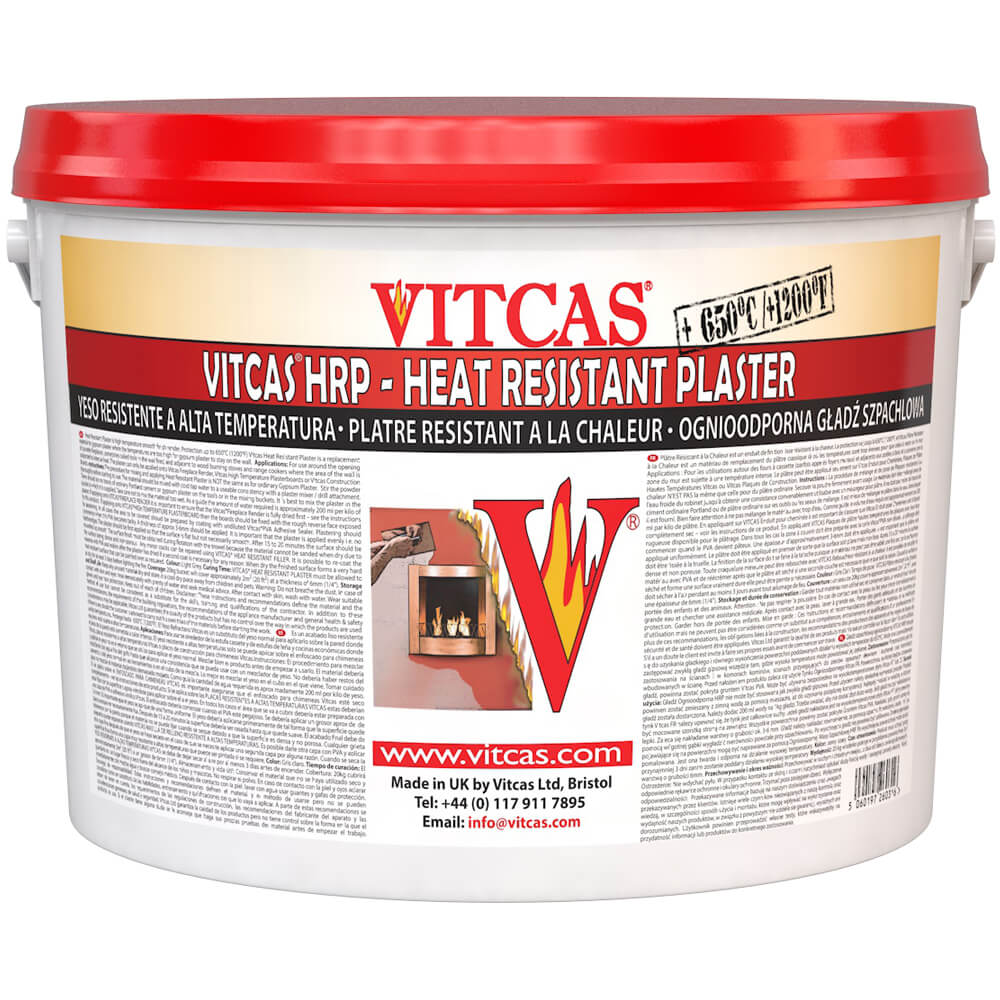
Heat Resistant Plaster is described, among other things, on the proper Fireplace Render and HT boards. The instruction indicates a layer of 3–6 mm. Do not treat it as an arbitrarily thick layer to fill a weakened section of the masonry.
Check the current substrate preparation and the required primer. The undercoat should be ready for the next layer according to the instructions. A dry appearance on the surface does not automatically confirm the state of the entire cross-section.
Plan the finish and return to work
The HR surface is smoothed during trowelling; the documentation does not provide for ordinary sanding of dry plaster. Minor repairs can be considered using Heat Resistant Filler within its described scope. Each stage should correspond to the actual damage.
Maintain the drying and preparation requirements of the fireplace before further use. Record the layers and dates of execution. If a crack reappears, compare the support and joint movement instead of assuming that another thin layer solves every cause.